Building a Voiceprint Enrollment Flow for Meeting Intelligence Products

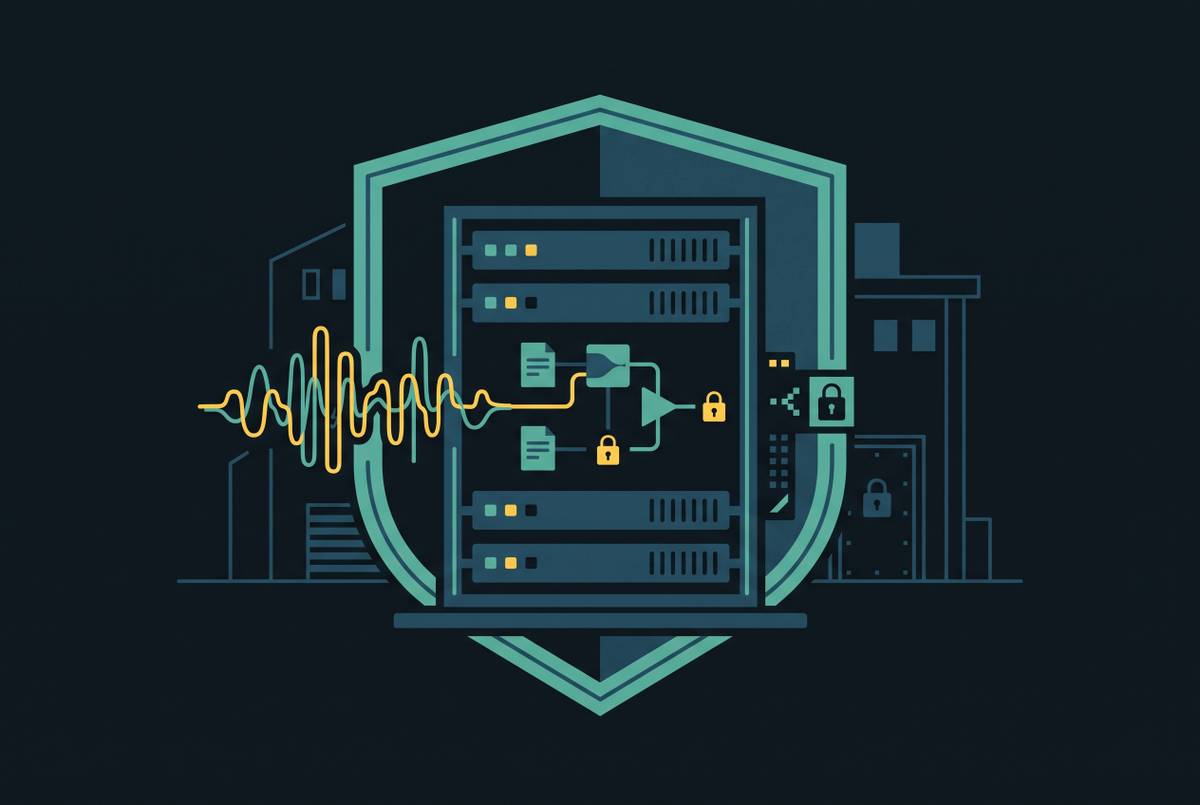
Meeting intelligence software can only attribute what it recognizes, and recognition lives or dies on the voiceprint enrollment flow built into the product. Get enrollment right, and the tool can tell you that a named participant agreed to ship the Q3 budget draft by Friday. Get it wrong, and every feature sitting on top of it, transcripts, action items, sentiment tracking, inherits a labeling error that no amount of polish fixes later. Most teams building these products treat enrollment as a UX afterthought, and that's backwards: it's the legal and technical foundation everything else sits on, and treating it as decoration is how a company ends up in front of a judge.
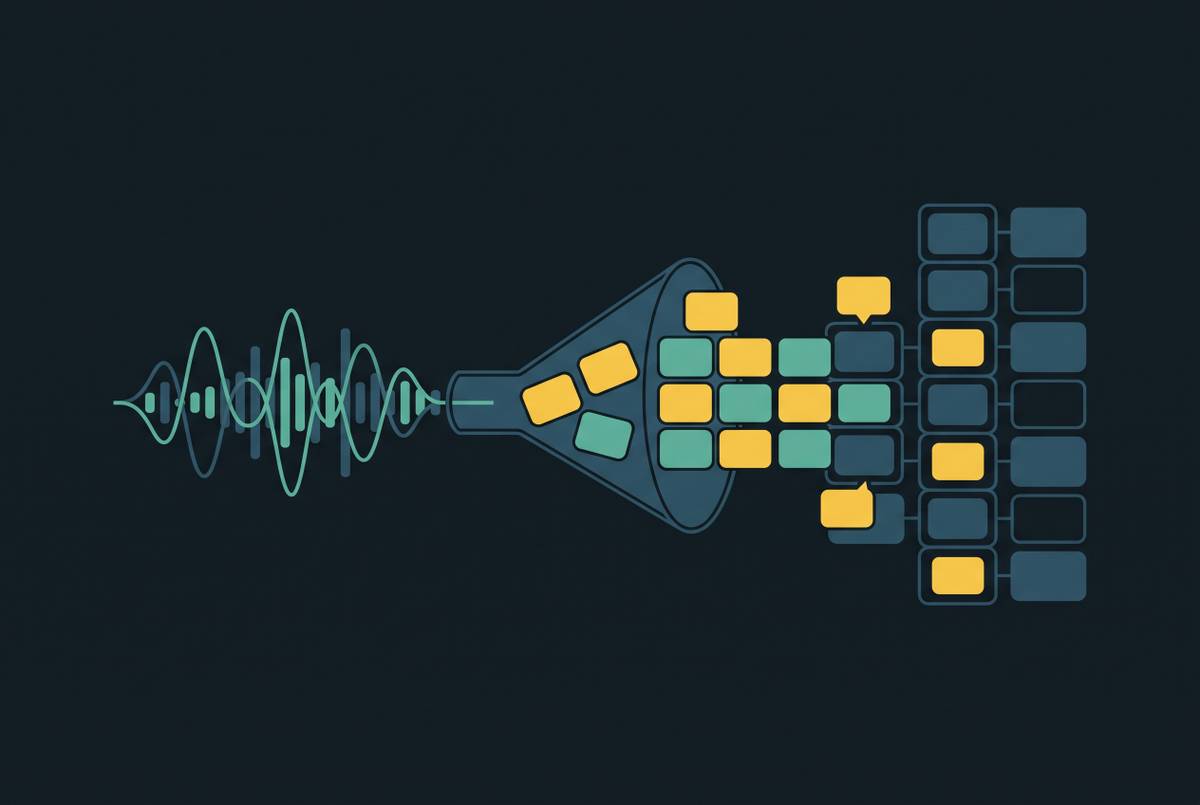
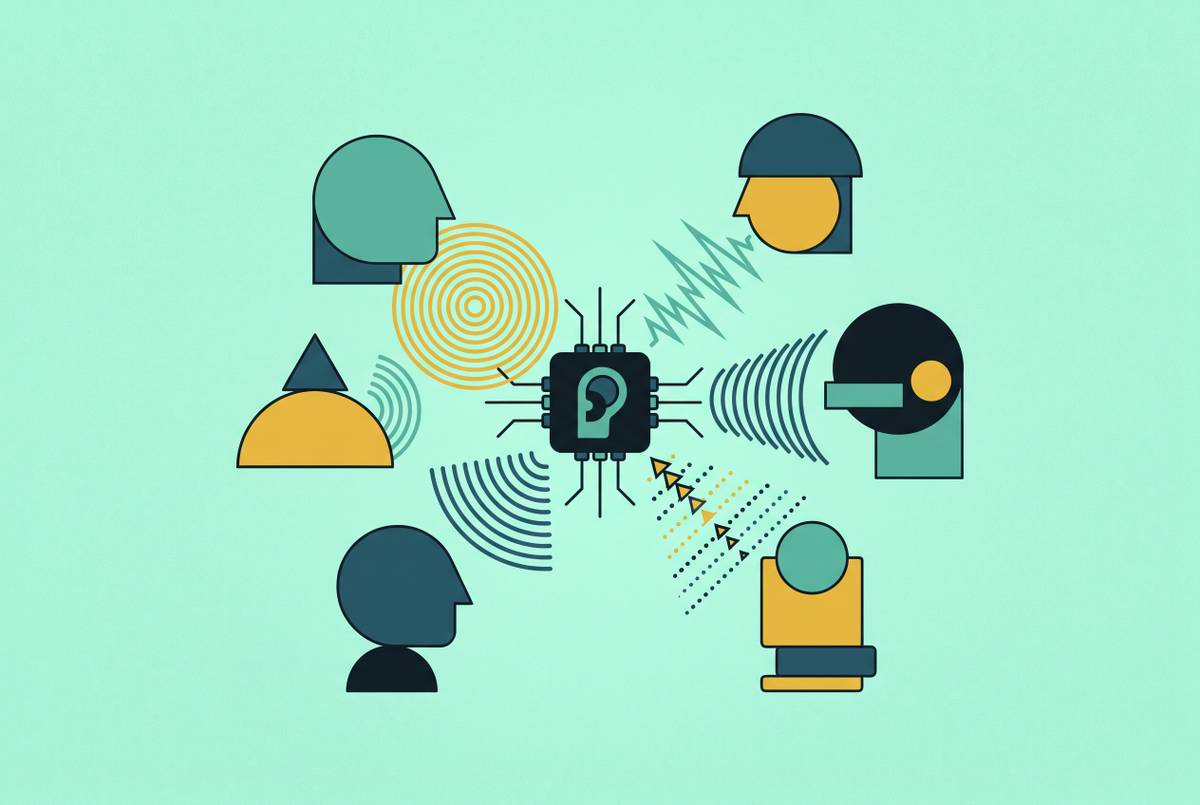
Start with a distinction that gets muddled constantly: diarization is not identification. Diarization answers "who spoke when" using generic labels, Speaker 0, Speaker 1, Speaker 2, based on acoustic clustering alone. It has no idea who Speaker 0 actually is. Identification is the separate step that matches a voice against an enrolled profile and attaches a real name to it, and that match runs on a voiceprint: a numerical representation of speech rhythm, pitch, intonation, and loudness, rendered as a vector. It isn't a recording. You can't play it back and hear a voice. Matching happens by comparing vectors, not by comparing sound.
Every attributed line in a meeting summary, every action item, every sentiment read, is only as good as the speaker label sitting under it. "Someone agreed to ship by Friday" is nearly useless if a dispute comes up later. "Sarah agreed" is a record. The whole value of meeting intelligence rests on that second sentence being true, and it can only be true if a voiceprint already exists on file to make the match. Enrollment is the foundation. Everything else is built on top of it.
Active versus passive enrollment: the architectural choice that drives every other decision
Active enrollment, sometimes called text-dependent, asks the user to repeat a fixed passphrase. It's simpler to build and tends to produce more accurate matches per second of audio collected, since the system knows what phonemes to expect. The cost is friction: users have to stop, read a script, speak it clearly, and that fixed phrase becomes a target too, since a replay of that exact clip can fool a naive matcher.
Passive enrollment, or text-independent, skips the script. The voiceprint builds from whatever the person happens to say, no dedicated setup step required. Heading into 2026, this is the direction meeting products are converging on: quiet, passive "express enrollment" built from ordinary meeting speech instead of a staged onboarding moment.
Microsoft Teams is the clearest live example. The feature was announced under Microsoft 365 Message Center ID MC1197146 (Roadmap ID 537269). Users without an existing voice profile go to Teams settings, open the Recognition tab, and opt in, after which the profile builds simply from speaking during a meeting. An in-meeting prompt is planned for later, but for now the opt-in sits buried in settings. The feature ships on by default for enterprise tenants, with Education tenants explicitly excluded. A September 3, 2026 update set the rollout completion target for later that same month. Once enrolled, users get voice isolation, speaker attribution, sharper transcripts, and Copilot recaps that name real action-item owners instead of Speaker 2.
Passive enrollment is the wrong default for anything feeding a corporate record. It lowers friction and drives adoption numbers up, which is what product teams get rewarded for. But it also means the voiceprint gets created with no standalone, dedicated consent moment attached to it, and that absence is exactly the pattern regulators and plaintiffs' attorneys have started hunting for. A design choice made to juice onboarding metrics turns into a legal exposure problem six months later, and no amount of clean interface design quietly engineers around that. The compliance section below spells out why.
Audio requirements and the technical thresholds that define a viable enrollment
Enrollment needs a minimum amount of usable audio, and the published thresholds give builders something concrete to design against. Amazon Connect Voice ID, retired May 20, 2026, remains the clearest baseline on record: 30 seconds of net customer speech, excluding silence, to build a voiceprint, and just 10 seconds to verify identity on a return call. The caller never had to say anything specific. Ordinary speech from a routine IVR interaction was enough.
Newer passive systems push that threshold down further. Picovoice Eagle is cited as an emerging passive baseline, able to enroll in seconds from natural speech and identify an enrolled speaker from a single short utterance. Five seconds is a working passive enrollment floor in current practice, hit through normal talk with no challenge phrase involved. Active challenge phrases still buy some accuracy bump over passive collection, but that gain costs user friction directly, and for most meeting products it isn't worth the trade.
The infrastructure under all of this shifted hard in 2026, and not in a direction that helps teams building today. Azure AI Speaker Recognition retired September 30, 2025, and Microsoft hasn't named a successor API for general application use. Amazon Connect Voice ID followed on May 20, 2026. Two major cloud speaker-recognition options disappeared within eight months of each other, so teams building enrollment flows right now can't lean on either as a foundation. AssemblyAI released Universal-3.5 Pro on July 7, 2026, described by the company as its most accurate model to date. The field includes Speechmatics, Deepgram, AssemblyAI, Google, and AWS among the major options, alongside Whisper as an open-source baseline. SpeechBrain and pyannote exist too, but they're Python research frameworks first, with higher error rates, heavier compute needs, and no real cross-platform story.
30 seconds of net speech is the number to hit for anyone building a passive meeting-enrollment flow, but a meeting doesn't hand you 30 clean seconds on a plate. Some participants talk for two minutes straight. Others say "sounds good" once and go quiet for the rest of the call. The flow has to gather usable audio across the whole session, quietly, and accept that some attendees simply won't generate enough speech to enroll that day.
Liveness detection: the second layer that voiceprint matching alone cannot provide
Voice cloning stopped being a research curiosity years ago. It's a commodity now: a few seconds of sample audio pulled from a public recording, or even a prior meeting, can generate synthetic speech convincing enough to fool a human ear, and worse, convincing enough to fool a voiceprint matcher that has no way to tell live speech from a well-made forgery.
Liveness detection catches what matching alone can't. A working setup typically stacks randomized challenge phrases, analysis of synthetic-audio artifacts (vocoder fingerprinting, the digital residue generative speech models leave behind), and replay-attack detection on top of the base match score, before any attribution or access gets granted. A common architecture runs three components in parallel: one hunts spectral artifacts for replay attacks, another hunts vocoder fingerprints for synthetic voices, and a third analyzes channel paths by checking codec and call-path signatures. All three feed into one combined liveness score.
Even the best systems available today don't close this gap, and pretending otherwise is the mistake most teams make. Open benchmarks from ASVspoof 5 show top detectors catching approximately 90–95 percent of state-of-the-art TTS cloning as of 2026, and that number gets worse under adversarial conditions where the attacker tunes synthetic audio specifically to beat detection. Detection reaches only 90–95 percent against state-of-the-art TTS cloning as of 2026, and that number gets worse under adversarial conditions where the attacker tunes synthetic audio specifically to beat detection.
For a call center, a missed spoof means a fraudulent transaction. For a meeting intelligence product, the stakes look different but aren't smaller: a spoofed voice attributed to a real person corrupts the transcript record permanently, and once that happens, every action item and decision tied to that recap becomes something nobody can trust. Vendors split along specialization lines here. Pindrop leads on fraud-detection-first synthetic-voice work. ID R&D tops liveness-detection benchmarks specifically. Nuance Gatekeeper, now under Microsoft, brings the deepest enterprise integration and the largest enrollment dataset. Daon focuses on banking and identity orchestration. Teams needing on-prem deployment sometimes build on open-source components like AASIST with custom orchestration layered on top.
Treating liveness detection as a binary pass-or-fail gate is the second mistake, and it's just as common as the first. Current benchmarks put the detection ceiling at 90 to 95 percent, which cuts spoofing risk considerably but doesn't erase it. Architects need a fallback path, manual review, secondary authentication, something, for the cases that slip through. Skipping that step because the primary detector "usually works" is how a spoofed transcript ends up shaping someone's performance review.
The compliance layer: why voiceprints are biometric data from the first line of code
Illinois' Biometric Information Privacy Act (BIPA) is the sharpest edge in this space right now, and Microsoft is currently facing a claim that should worry anyone building this feature. In Basich et al. v. Microsoft, filed February 5, 2026 in the District Court for the Western District of Washington, five Illinois residents allege that Teams' transcription feature collected their voice biometrics without the notice and written consent BIPA requires. The complaint says Microsoft never disclosed that biometric identifiers were being created and never provided a retention schedule. BIPA's statutory damages run $1,000 to $5,000 per violation, on top of attorneys' fees and possible injunctive relief. An appellate circuit confirmed BIPA's retroactivity in April 2026, a development that matters directly for cases already pending.
A generic privacy policy satisfies none of BIPA's actual requirements, and this is where most compliance efforts quietly fail. Written notice has to come before capture, and it has to state the specific purpose of collection and how long the voiceprint will sit on file. A spoken IVR disclaimer doesn't count. A written release, a real e-signature or a documented opt-in, has to happen before collection starts; staying on a call after a disclaimer plays is not consent under this law. Destruction has to follow a documented process: templates get deleted once their original purpose is served, or within three years of the person's last interaction, whichever comes first. Organizations need a standalone biometric data policy too, posted publicly before any collection begins, naming voiceprints specifically along with the retention period and the deletion trigger.
Illinois is no longer the only jurisdiction that matters, and treating it as the sole compliance target is a real strategic error. Texas SB 140, effective September 1, 2025, sets penalties of $500 to $5,000 per violation under the state's consumer protection statute, with treble damages for willful violations. Tennessee's ELVIS Act, effective July 1, 2024, protects a person's voice as a right of publicity specifically against AI cloning. Colorado and Utah both run biometric overlays of their own. The FTC's amended COPPA rule, published April 22, 2025 and effective June 23, 2025 with a compliance deadline of April 22, 2026, folded biometric identifiers, voiceprints included, into the definition of "personal information." Capturing a child's voiceprint is now categorically COPPA-regulated, which matters directly for any meeting product used in schools or by minors.
The EU AI Act adds another layer starting from its general application date of August 2, 2026. Article 50 requires that AI systems designed to interact directly with people make clear, no later than the first interaction, that the user is dealing with an AI system, unless that fact is already obvious to a reasonably informed person. Penalties scale steeply, with the most serious prohibited practices under Article 5 drawing the highest fines and other violations, Article 50 included, drawing lower but still significant ones under the Act's tiered penalty structure. Under GDPR, voiceprints count as special-category biometric data, which triggers heightened requirements before processing starts.
All of this converges on one point that passive enrollment can't dodge. Systems that build voiceprints straight from ordinary meeting recordings, with no dedicated enrollment step and no consent flow attached, are not the safer, lower-friction option they look like on a product roadmap. They're the riskier one, precisely because the missing consent moment is the exact thing BIPA and GDPR exist to catch.
Designing the consent moment: where UX and legal requirements intersect in the enrollment flow
Passive enrollment cuts friction and lifts enrollment rates, which is what product teams get measured on. The law wants a documented, written, deliberate consent moment before any biometric template gets built. Those two goals pull in opposite directions, and no clever interface fully resolves that tension on its own. It has to get designed for directly, on purpose, by someone who owns both the legal risk and the drop-off numbers.
A single compliant consent screen ends up carrying a lot of weight. BIPA requires it to give written notice of voiceprint collection, its specific purpose, and its retention period. It has to capture a written release or a clearly documented opt-in before any audio gets used biometrically. It may need separate recording consent depending on jurisdiction. For EU users, it has to meet GDPR's explicit-consent bar and trigger the DPIA process. And where transcript attribution feeds HR or performance systems, it needs pre-use notice and an opt-out for any automated decision that regulators would class as a "significant decision" about a person.
Good design carries a lot of that weight without turning into a wall of legal text. Progressive disclosure helps: surface the consent ask when it's actually relevant, inside the meeting itself, rather than three menus deep in account settings. Plain language explaining why the voiceprint exists and what happens to it does more for trust, and for legal defensibility, than dense boilerplate ever will. Controls need to stay easy to find, too. Users should be able to check enrollment status, download their data, or delete it without digging through a settings tree.
Friction isn't automatically the enemy here. Enrolling a voiceprint that permanently tags a person's words in a corporate transcript is a bigger deal than granting an app access to a camera roll, and the consent flow should feel proportionate to that. Onboarding drop-off is still a real cost, though: Research has found that a significant share of new customers abandon onboarding when the process drags on too long, so the flow has to be thorough without becoming a chore nobody finishes.
Teams' in-meeting prompt model is a reasonable attempt at threading that needle. Asking during an active meeting makes contextual sense, since that's the moment the request actually means something to the person receiving it. But it also means the consent interface has to stay legible and non-coercive under the mild social pressure of a live meeting, which is a harder design problem than a static settings page ever was.
Enterprise deployments get a compliance safety valve through admin controls. In Teams, administrators can disable express enrollment by setting PassiveVoiceEnrollment to Disabled in the Teams AI policy, and can turn off voice enrollment entirely by setting both EnrollVoice and PassiveVoiceEnrollment to Disabled. Organizations that already had EnrollVoice set to Disabled as of May 2026 had that same value carried over to PassiveVoiceEnrollment automatically, preserving their existing opt-out instead of silently re-enabling the feature. Administrators will need direct visibility into voice and face enrollment data across the organization to manage retention and deletion obligations.
Putting the three layers together: a checklist for teams building or evaluating an enrollment flow
Four things need locking down technically before anything ships. Confirm the audio accumulation strategy first: passive meeting enrollment has to gather enough net speech, 30 seconds by the published Amazon benchmark, without turning the process into a chore, and the design has to account for participants who barely talk early in a call. Choose infrastructure with clear eyes: Azure AI Speaker Recognition and Amazon Connect Voice ID are both gone now, retired September 2025 and May 2026 respectively, so current vendors need evaluation on today's merits, not legacy reputation. Liveness detection isn't optional; replay-attack detection, synthetic-voice detection, and channel-path analysis all need to sit on top of the base voiceprint match before attribution happens. And a fallback escalation path has to exist, since the 90 to 95 percent detection ceiling on current benchmarks means liveness checks will occasionally miss, and manual review or secondary authentication needs to catch what falls through.
The compliance side is just as concrete, and just as non-negotiable. Written notice has to precede capture, spelling out the specific purpose, the retention period, and the destruction trigger. A documented written release, real e-signature or explicit opt-in, has to replace anything resembling implied consent. A standalone biometric data policy needs public posting before collection starts. A documented deletion process needs to run on either purpose completion or a three-year interaction window, whichever comes first. Every team needs to map its actual jurisdictional exposure, since BIPA, Texas SB 140, the Tennessee ELVIS Act, the Colorado and Utah biometric overlays, the amended COPPA rule, GDPR Article 9, and EU AI Act Article 50 don't apply evenly across every user base. Figuring out which ones apply is not optional homework to skip. A defensible enrollment flow keeps a product a product feature rather than a name on a court docket.
Sources
- Express Voice Enrollment in Teams: In-Meeting Profiles & AI
- Express Voice Enrollment in Microsoft Teams | Topedia Blog
- Voice Biometric Authentication: Pindrop, Nuance, Open Source
- Use real-time caller authentication with Voice ID in Connect Customer - Amazon Connect Customer
- AI Voice Biometrics and BIPA 2026: Call Center Voiceprint Compliance
- US Voice AI Regulations 2026: TCPA, BIPA, HIPAA
- softcery.com
- americanbar.org