Whisper Large V3 vs Whisper Medium for Meeting Transcription Cost and Accuracy
Large V3 justifies its cost only for multilingual, accented, or noisy audio.
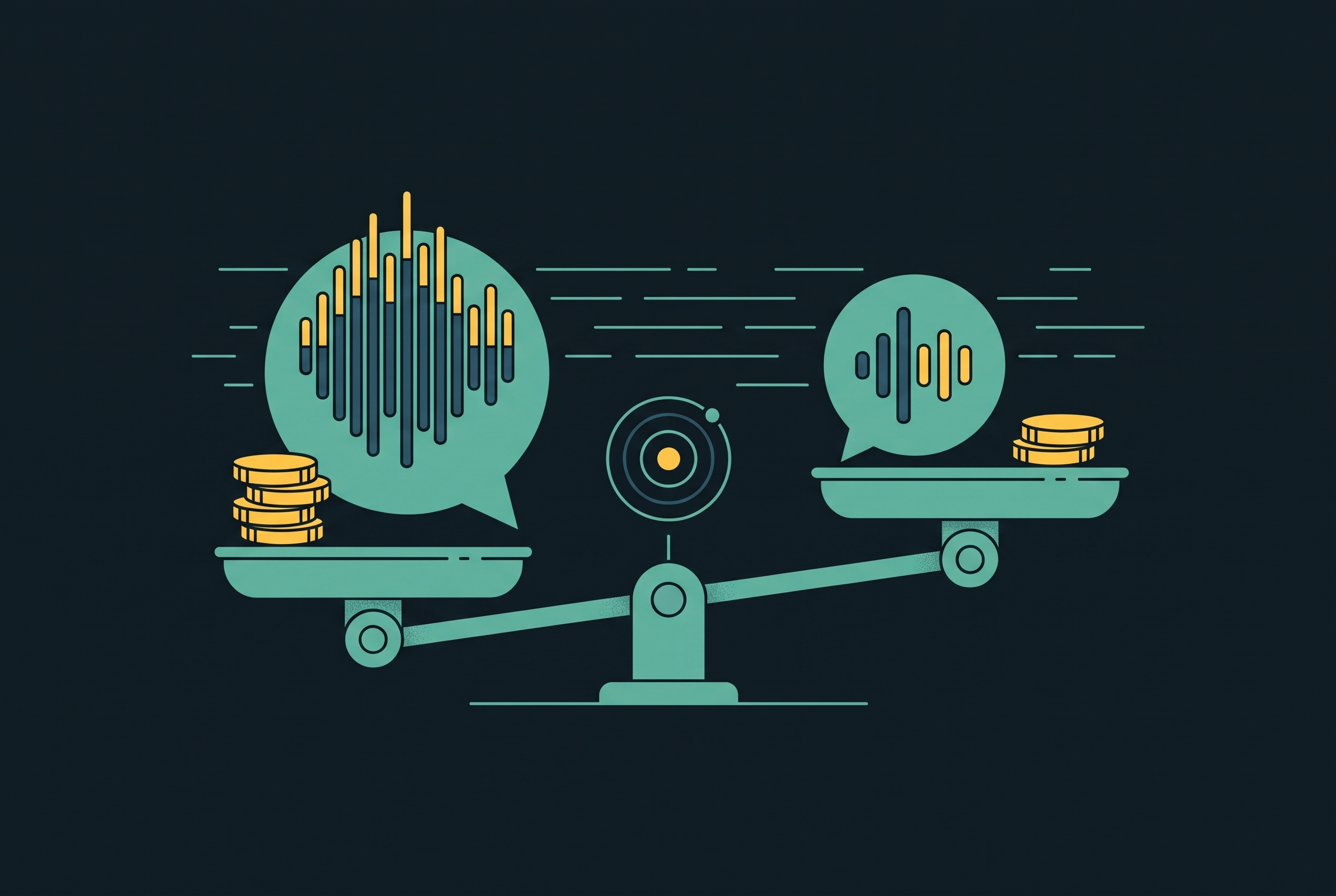
Whisper Large V3 versus Whisper Medium is a meeting transcription decision about conditions. Large V3 earns its extra computing cost on multilingual, accented, and difficult audio. Medium remains a defensible choice for well-supported languages, constrained hardware, and workloads that tolerate some errors. The useful comparison therefore includes the model, deployment path and transcription pipeline.
Why the Large V3 vs. Medium question is harder to answer than it looks
A meeting transcript brings together problems that a clean speech benchmark tests on their own. People in a meeting may use different languages, speak over one another, or leave long pauses between stretches of speech. Hardware then determines how quickly the recording can be processed, while pipeline configuration affects which parts reach the model. These conditions interact. A model comparison that holds them out of view can give a precise answer to the wrong question.
Language and recording conditions can shift accuracy more than a change in model version. Clean read speech provides a useful performance reference, but it is not a meeting-room forecast. Ordinary microphones, background noise, and accents lead to more errors across languages. The relevant comparison is between models processing the kind of audio the team actually records, rather than their strongest results on controlled material.
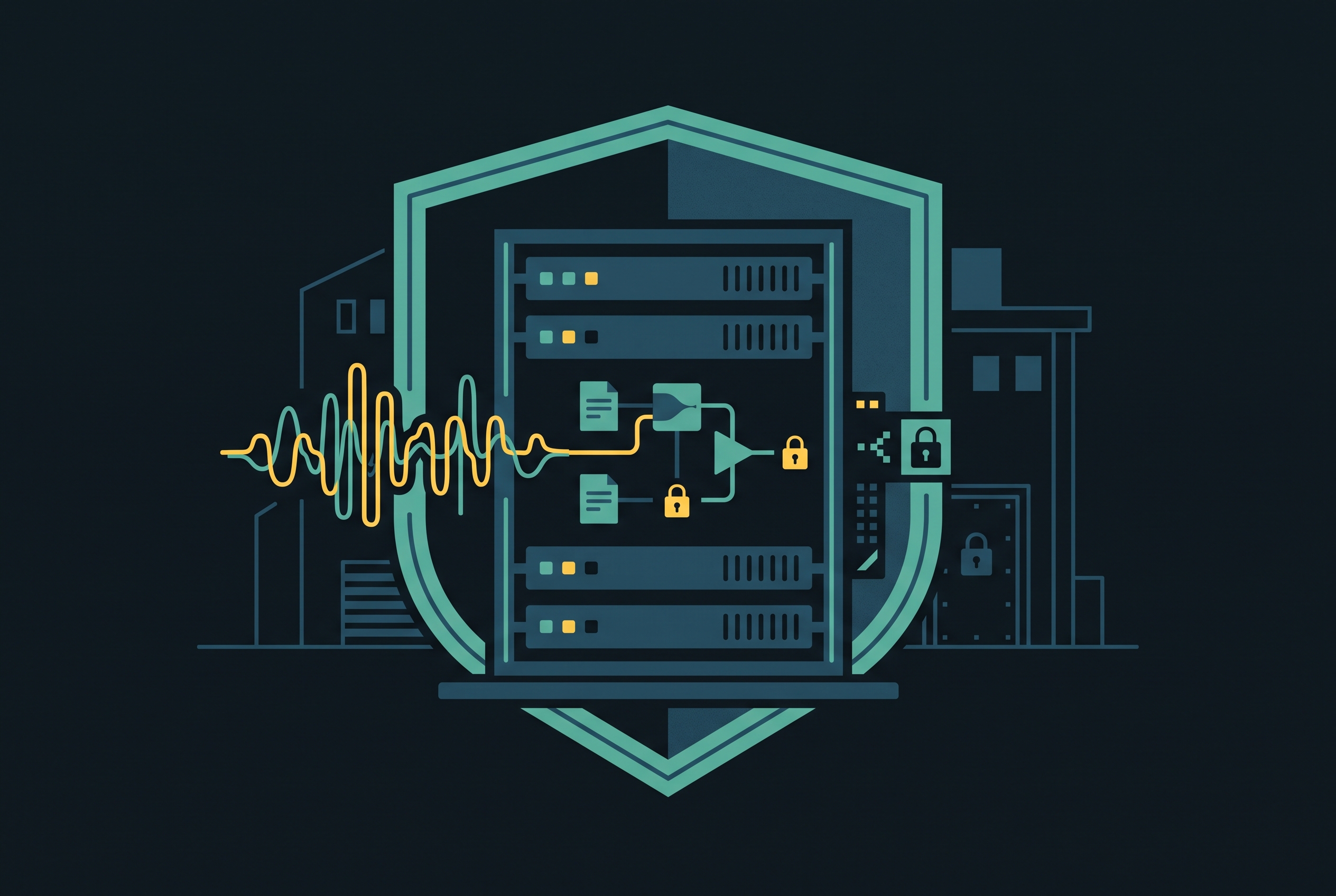
Speaker attribution is a separate limitation shared by both. Neither model natively separates speakers, so both treat multi-speaker audio as a single text stream. That distinction is consequential for meetings, where knowing who made a commitment may be as important as recovering the words. Choosing Large V3 does not, by itself, turn transcription into a complete meeting record.
What separates the two models architecturally and in training
Both models use an encoder-decoder transformer architecture, so the choice is not between fundamentally different approaches to speech recognition. The main differences are model size, depth, and training data. Medium has 769M parameters, while Large V3 has roughly twice that number. Large V3 also has 32 audio and text layers versus Medium’s 24. Its greater depth and size provide more capacity, but require more computing resources for inference.
Training data explains why that extra capacity has practical value. Large V3 was trained on a substantially larger and more diverse audio corpus, while Medium used an earlier, smaller corpus. That broader training helps Large V3 do better with difficult accents and languages that have less support. Its lead is smaller on straightforward English speech. More capacity does not produce an equally large improvement on every recording.
Language coverage can also create a categorical distinction. Large V3 introduced a new language token for Cantonese and extended coverage to one additional language. This is different from a modest reduction in errors within an already well-supported language, because explicit language support changes the basis of the comparison. For meeting transcription, the languages people use should therefore guide the choice of model from the start, before the final configuration details.
How much more accurate Large V3 actually is on the audio types that appear in meetings
On clean, single-speaker read English, both models perform well and the word error rate gap is small. That makes clean speech a weak basis for justifying Large V3’s additional resource requirements. Crowd-sourced speech recorded on ordinary microphones is a closer proxy for meeting conditions, and error rates rise substantially on that material. Noise, accents, and overlapping speakers expose a wider performance gap.
Variation across languages within one model can exceed variation between model versions, so an overall accuracy ranking can conceal poor performance in a particular meeting language. Large V3 performs better on low-resource languages and heavy accents, where Medium’s accuracy degrades noticeably. Pipeline tuning can only go so far in closing gaps in language support. A technically well-configured Medium deployment can still be the wrong choice for the speech it must recognize.
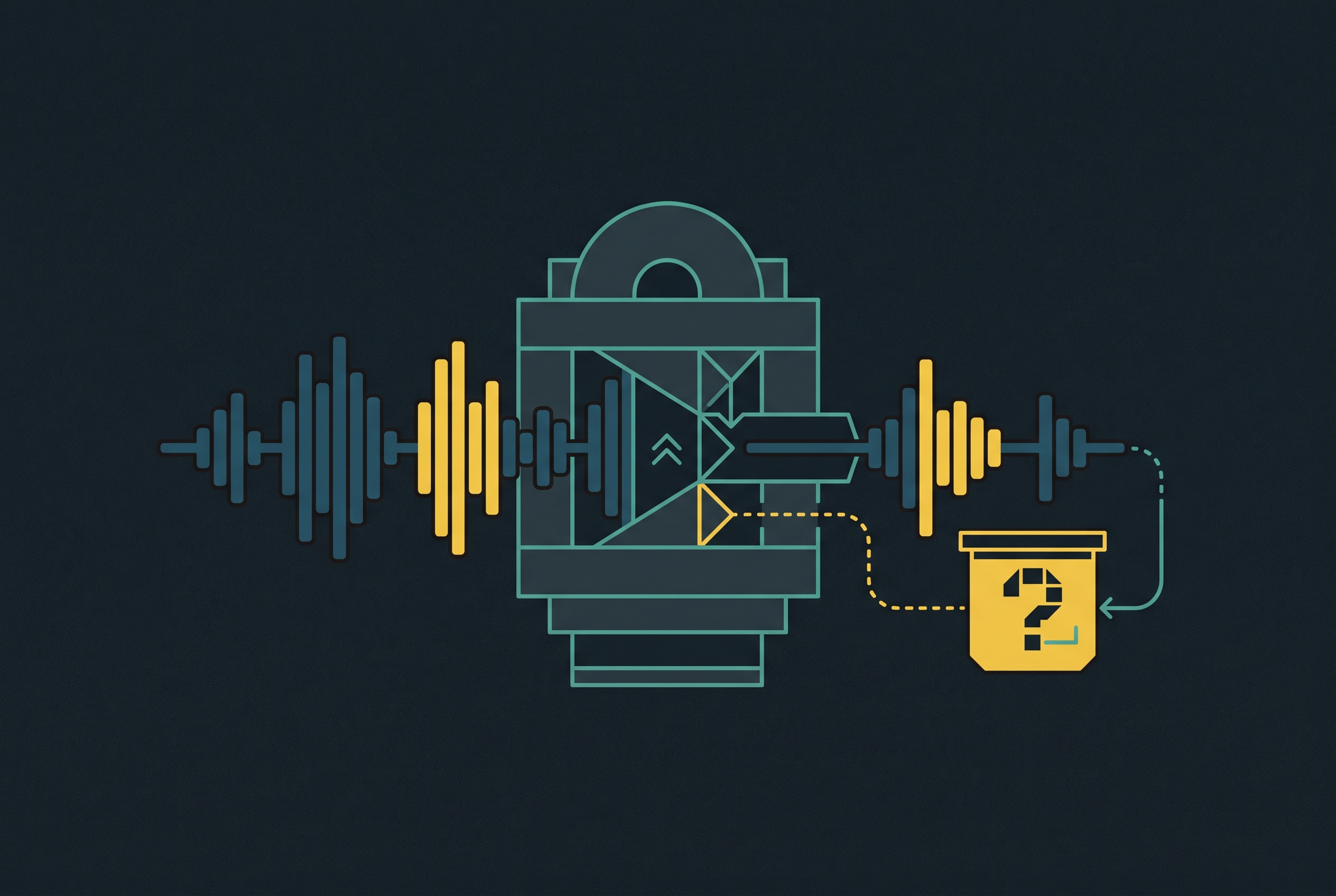
Word error rate also leaves part of the risk unresolved. During pauses, laughter, keyboard noise, and other non-speech intervals, Whisper’s decoder can continue generating tokens and produce plausible text that nobody spoke. Medium is not immune to this behavior. Large V3 can also invent text despite its better recognition, and claims that it produces less hallucination than V2 hold only in some conditions. Meeting audio repeatedly presents precisely these opportunities for unsupported output.
The practical accuracy case for Large V3 is therefore strongest for multilingual meetings and recordings with heavy accents or background noise. It is weakest for clean, English-only, single-accent calls. Whether that advantage is usable also depends on the machine running the model.
How hardware constraints change the speed gap — and sometimes reverse the accuracy ranking
VRAM availability determines whether full Large V3 can run at an operationally useful speed. FP16 inference requires roughly 4–6 GB of VRAM for Large V3, compared with roughly 2–3 GB for Medium. Medium consequently fits on a wider range of consumer GPUs and leaves room for more concurrent streams on a GPU instance. That changes both throughput and deployment feasibility. A team may have enough hardware for transcription without having enough for its preferred model.
Medium can run at multiple times real-time on Apple Silicon, making it a rational choice when local processing speed is a priority. Hardware and implementation can also produce accuracy rankings that differ from benchmark expectations. A CPU-based result describes the performance reached by a particular execution path, which may not realize the larger model’s potential.
Speed feasibility needs to be established before accuracy gains are compared. A larger model that cannot meet the workflow’s timing requirements is not an operational upgrade. Large V3 Turbo changes that trade-off directly. It has 809M parameters, with 32 audio layers and 4 text layers, and runs substantially faster than full Large V3 while retaining most of its accuracy. It also requires less VRAM, making it a third option rather than merely a faster setting for the same deployment.
Turbo therefore weakens the original binary comparison. It is faster than Large V3, more accurate than Medium, and cheaper to run per audio hour than full Large V3. For practitioners whose main objection to the larger model is inference cost or speed, those differences can redirect the decision. Hardware still constrains the choice, but the available options are no longer simply accuracy or a smaller footprint.
What meeting transcription actually costs under each deployment path
The cost comparison begins with deployment. Medium is a self-hosted choice in this comparison and is not offered through the OpenAI hosted API. Large V3 and Turbo are available through third-party hosts, with rates substantially below the OpenAI hosted API. With hosted pricing, the bill is based mainly on how much audio is processed. Self-hosting instead makes the team responsible for the computing capacity that processes that audio.
A self-hosted GPU bills for every hour it is running, whether meetings are arriving or not. Live meetings also hold a transcription stream open for their full length. At high utilization, self-hosted Large V3 can cost a fraction of the hosted API rate for the same audio volume. Sporadic meeting schedules can reverse that advantage because unused GPU time remains part of the bill.
Medium reduces self-hosting costs through concurrency as well as its smaller hardware requirement. Its lower VRAM footprint allows more simultaneous meeting streams per GPU instance, which is useful when many calls need transcription at once. That benefit is distinct from the cost of processing one isolated recording. A workload with overlapping calls can therefore favor Medium even when full Large V3 fits on the available hardware.
Lower infrastructure spending does not compensate for unacceptable errors in the languages a team uses. For most teams starting out, a hosted API offers the lowest-friction entry because it avoids infrastructure overhead. Self-hosting Medium becomes compelling when volume, utilization, and concurrent stream demand justify managing the hardware.
Why pipeline configuration often matters more than model choice
A voice activity detection front end, a correct language hint, a domain-specific initial prompt, and a diarization pass can each change the usefulness of the output substantially. Their effects can be comparable in scale to switching from Medium to Large V3. An untuned upgrade may therefore deliver less benefit than a tuned Medium pipeline.
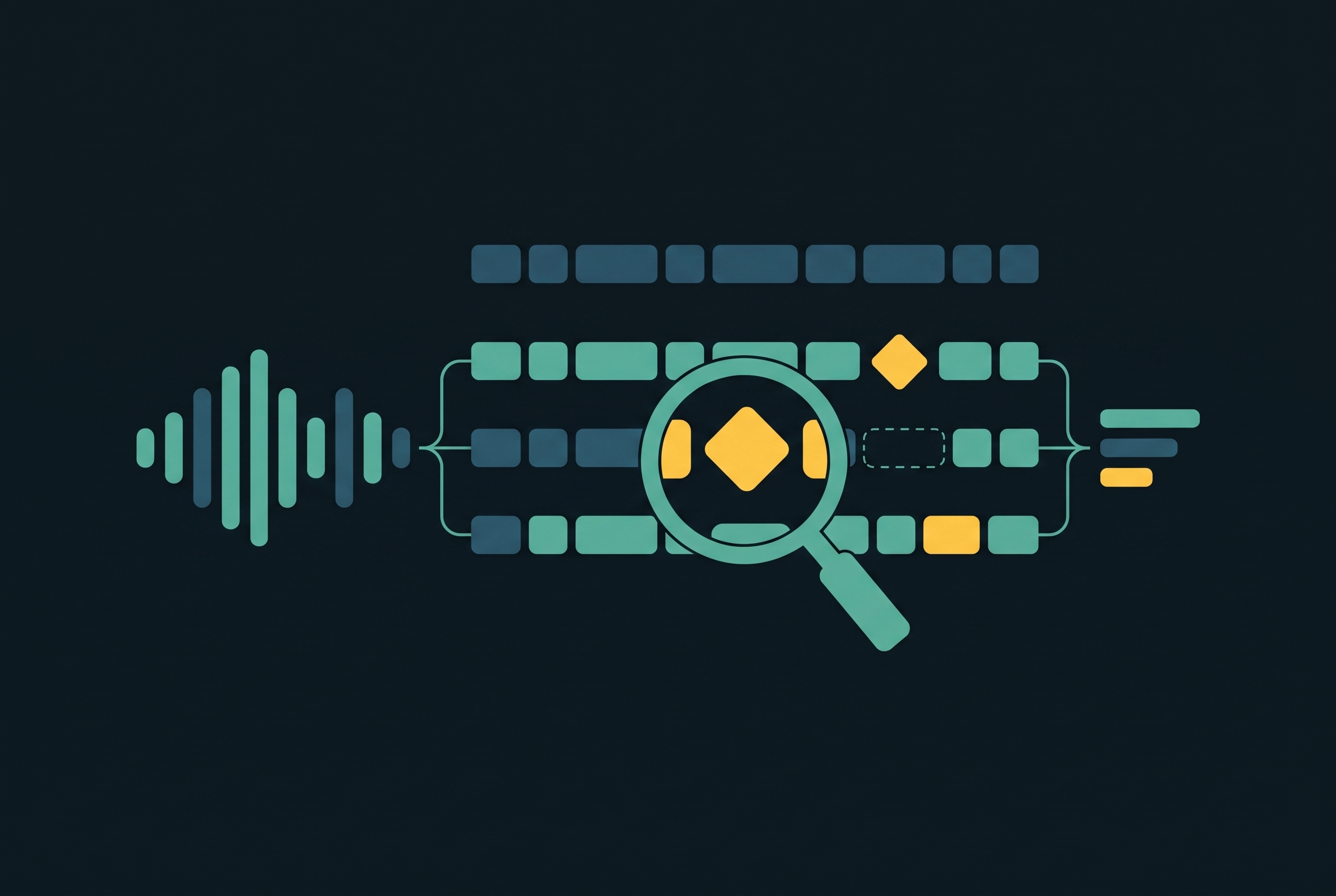
Voice activity detection addresses the non-speech failure mode directly. By gating the model so that it processes segments containing speech, it reduces exposure to pauses and background sounds that can trigger invented text. With a correct language hint, the model has less need for language detection and may make fewer code-switching errors. A domain-specific initial prompt serves a different purpose, priming the decoder with technical terms, product names, and proper nouns. General speech benchmarks do not fully capture the value of recognizing that vocabulary correctly.
Diarization supplies information that neither model provides natively. WhisperX combined with pyannote-audio is the standard stack for adding speaker attribution, and it applies to both Medium and Large V3. Word recognition and speaker assignment should therefore be treated as related but distinct parts of the pipeline. Moving to Large V3 does not remove the diarization requirement. Even with a good diarization pass, the model can still struggle to recognize speech in an under-supported language.
A tiered deployment follows naturally from those differences. Routine English calls can use a faster or smaller model, while multilingual or high-stakes recordings use full Large V3. Distil-Large-V3 for English and Large V3 for multilingual sessions with code-switching is one such configuration, although the enterprise example supplied for it lacks a named company or primary source. It should not be treated as verified production evidence. The underlying allocation remains useful because it matches model capacity to the recordings that need it.
A concrete decision framework: which model fits which meeting conditions
The first condition is hardware availability. For a team with no discrete GPU or less than 4 GB of VRAM, Medium or Turbo is the viable self-hosted alternative to full Large V3. Medium is especially suitable when available memory and concurrent stream count are binding constraints. This establishes what can run locally at useful speed. If the conditions below call for full Large V3, a hosted or managed service is a practical way to use it.
The second condition is language mix. Low-resource languages, Cantonese, or heavy code-switching favor Large V3 where Medium underperforms, because pipeline tuning cannot close a substantial recognition gap. This condition can override a preference for cheaper local inference. A team whose hardware favors Medium but whose languages require Large V3 should not treat the hardware result as the final answer. It instead indicates a need to change the deployment path.
The third condition is audio quality and speaker count. Both models do well on clean, single-speaker North American or British English, so the choice comes down to hardware and cost. Noisy, accented, or multi-speaker recordings strengthen the case for Large V3. With either model, the pipeline still needs a separate step for speaker attribution.
The fourth condition is accuracy tolerance. Published transcripts, compliance uses, and external review make Large V3 the defensible choice, without implying that its output is error-free. Internal search and action-item extraction can justify Medium with a tuned pipeline when imperfect recall is acceptable. For teams taking the managed-service branch, BrassTranscripts is one available option built on WhisperX large-v3 with integrated speaker diarization, word-level timestamps, and managed batch processing. It removes the need to manage GPU infrastructure rather than changing the underlying recognition trade-off.
Hosted transcription is an easy way to start, while a move to self-hosted Turbo can make sense when there is enough audio to process and the hardware gets enough use. Medium retains a clear role where memory is tight, languages are well supported, and concurrency is a priority. As hardware costs fall and Turbo matures, the Medium versus Large V3 binary continues to narrow.
Sources
- Distil-Whisper: Robust Knowledge Distillation via Large-Scale Pseudo Labelling
Provided background on the Distil-Whisper approach, informing the article's mention of Distil-Large-V3 as an English-optimized configuration in a tiered deployment.